

Tarhuntassa: The Lost Capital of the Hittites
Tarhuntassa is one of the greatest mysteries of Hittite archaeology. In the early 13th century BCE, the great King Muwatalli II moved the empire’s capital from Hattusa to this very location in southern Anatolia. The city is mentioned in dozens of cuneiform texts; treaties were signed there, and armies marched out from it. But the exact location of Tarhuntassa remains unknown to this day. The search has been ongoing for over a century; potential sites have been proposed in the provinces of Mersin, Konya, and Karaman, and each has its own supporters. This is a rare case where the capital of a Bronze Age empire remains a “geographical phantom.”
History and Significance
The relocation of the capital to Tarhuntassa took place under Muwatalli II, apparently in the years immediately before or after the famous Battle of Kadesh (around 1274 BCE) against the Egyptian pharaoh Ramses II. The exact reasons for the relocation remain a subject of debate; the main hypotheses are as follows:
1. Military-strategic: bringing the center of command closer to the Syrian theater of operations and facilitating logistics on the eve of the clash with Egypt.
2. Religious: the rise of the cult of the God of Thunder (Tarḫunt), whose name became the name of the new city (Tarḫuntašša—“City of Tarḫunt”).
3. Economic and communication: control over the southern sea lanes and trade routes through Cilicia.
After the death of Muwatalli II, his successor Mursili III moved the capital back to Hattusa. However, later Mursili III appointed Muwatalli’s son, Prince Kurunta, as regional king of Tarhuntassa. Over time, Kurunta proclaimed himself “Great King”—that is, he effectively claimed imperial status. The Hittite court contested these claims and, according to Hittite sources themselves, “buried the treaty.” At the turn of the 13th–12th centuries BCE, Suppiluliuma II reports that Hatti “attacked and plundered the city of Tarhuntassa,” after which all traces of the capital are lost along with the empire itself.
Where to Look for Tarhuntassa
Hypotheses regarding its location
Over the course of a century of searching, dozens of locations have been proposed. Among the most discussed are:
— the vicinity of Mersin and western Cilicia;
— the Konya region and the Kızıldağ Mountains;
— Sirkeli Höyük hill in Adana Province, where a monumental relief of Muwatalli II has been preserved;
— the vicinity of Kayseri;
— a relatively recent (2019) suggestion—the large settlement of Türkmen-Karahöyük near Çumra on the Konya Plain.
All these hypotheses are based on a combination of indirect evidence: distances, mentions of place names in texts, the presence of monumental reliefs, and the scale of the preserved ruins. Researchers openly acknowledge the speculative nature of most of these identifications.
Monuments associated with Tarhuntassa
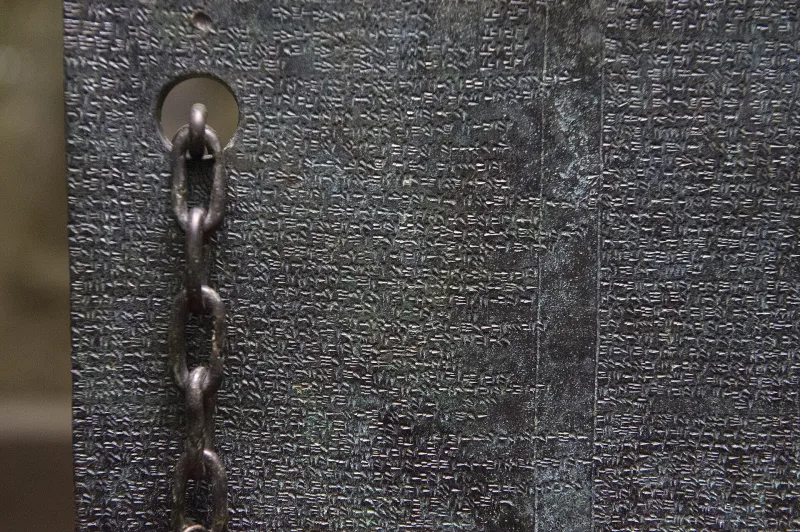
Although the city itself has not been located, a number of monumental monuments are undoubtedly associated with it. The most important of these is the hieroglyphic-Luwian Bronze Tablet from Hattusa, a treaty between Tudhaliya IV and Kurunta of Tarhuntassa, discovered in 1986. This text describes the borders of the kingdom of Tarhuntassa in detail and mentions dozens of place names in southern Anatolia—but without a detailed geographical map, it is extremely difficult to pinpoint their locations.
Tarhuntassa is also associated with a series of monumental rock reliefs and hieroglyphic inscriptions in southern Anatolia: Yalburt, Hatip, Karadağ, and Kızıldağ. All of these are part of the broader “Luwian” cultural sphere and help reconstruct the region’s religious and political geography.
What to see related to Tarhuntassa
Museum of Anatolian Civilizations (Ankara)
The main “material” remnants of Tarhuntassa today are on display at the Museum of Anatolian Civilizations in Ankara: fragments of hieroglyphic inscriptions, replicas of the Bronze Tablet, and reconstructions of reliefs. Here, among the stelae from Hattusa, texts mentioning the city are also exhibited.
Rock reliefs of southern Anatolia
If you want to feel the “breath” of the era, it makes the most sense to visit the Sirkeli Höyük relief on the banks of the Ceyhan—this is the oldest monumental Hittite relief in Anatolia, depicting Muwatalli II himself. The Hatip and Yalburt inscriptions also belong to this group and require a separate expedition.
Interesting facts
- Tarhuntassa is the only Hittite capital whose exact location has not yet been determined.
- The city’s name (Tarḫuntašša) translates as “(city of) the Thunder God Tarḫunt”; the relocation of the capital here may have been linked to a religious reform.
- The Bronze Tablet from Hattusa, discovered in 1986, is the largest known Hittite treaty and the primary source of information about the kingdom of Tarhuntassa.
- Prince Kurunta of Tarhuntassa proclaimed himself “Great King,” creating a brief period of dual kingship in the Hittite Empire.
- Ancient Tarhuntassa was destroyed by the Hittites themselves under Suppiluliuma II—a rare case of a capital “traitor city” in the Bronze Age.
How to get there
Since the exact location of Tarhuntassa is unknown, there is no specific tourist site. The most relevant routes associated with this name are:
— Museum of Anatolian Civilizations in Ankara: downtown, accessible on foot from Ulus Square;
— Sirkeli Höyük in Adana Province: about 40 km from Adana, best reached by rental car;
— Kızıldağ and Karadağ in Konya Province: require a dedicated trip and off-road driving experience;
— Türkmen-Karahöyük near Çumra: an archaeological site, but without a visitor center or exhibition for tourists.
Tips for travelers
If you are specifically interested in Tarhuntassa, start with the Museum of Anatolian Civilizations in Ankara—it houses key inscriptions and replicas of the Bronze Tablet, and the accompanying texts help explain why this lost capital was significant. After the museum, it makes sense to continue your field trip to the Sirkeli Höyük site and, if time permits, on to the Luwian inscriptions of southern Anatolia.
For the actual excavation sites in southern Anatolia, bring a car, drinking water, and sturdy shoes: infrastructure is minimal, and the roads are unpaved in places. It makes sense to research the current state of hypotheses in advance—the academic debate over the location of Tarhuntassa continues, and the picture becomes clearer with each field season.